The Police Chief and His New Post
Martin Brody is the police chief of Amity Island, a small coastal community in New England whose economy depends almost exclusively on summer tourism. Brody is a city man, originally from New York, who has come to Amity in search of a quieter life alongside his wife Ellen Brody and their two sons. His adjustment to the environment has not been entirely smooth, however: he suffers from hydrophobia, an irrational fear of water that proves particularly uncomfortable in a community whose identity revolves around the sea. Despite this, Brody carries out his duties with a sense of responsibility and tries to maintain order on an island whose population swells during the summer months with visitors flocking to its beaches.
The summer that opens the story is especially important to Amity's economy. Mayor Larry Vaughan and local merchants are expecting a lucrative season, and any disruption that might drive tourists away is perceived as a direct threat to the community's economic survival. This economic and political pressure forms the backdrop against which every decision the characters make throughout the story plays out.
The First Attack and Institutional Denial
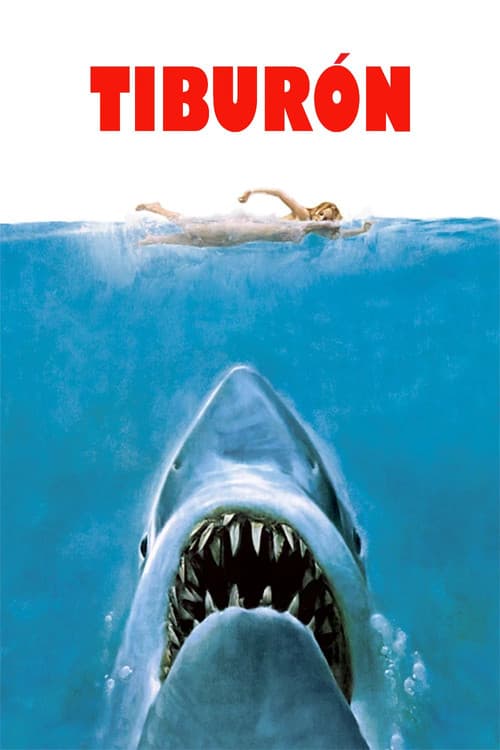
The disruption of the established order occurs in the film's opening moments. A young woman named Chrissie Watkins, after a beach party, wades into the ocean for a late-night swim. What begins as a carefree moment turns into a brutal attack: something beneath the water violently shakes her, drags her under, and kills her. The next morning, the remains of her body are found on the shore. The medical examiner determines that the cause of death was a shark attack.
Brody, convinced of the gravity of the situation, moves swiftly and orders the beaches closed immediately to protect swimmers. Mayor Vaughan intervenes, however, and pressures him to reverse the decision. Vaughan argues that closing the beaches in the middle of the tourist season would cause irreparable economic damage to the island, and manages to have the death certificate written in ambiguous terms, attributing Chrissie's injuries to a boating accident involving a propeller. Brody yields to this institutional pressure, and the beaches remain open.
The consequences of that decision are not long in coming. A boy named Alex Kintner is attacked and devoured by the shark in broad daylight, in full view of dozens of beachgoers on the crowded shore. The attack is unambiguous and can no longer be concealed. The boy's mother, Mrs. Kintner, posts a notice offering a three-thousand-dollar reward for the shark's capture, which triggers a wave of amateur hunters and fishermen who descend on the island drawn by the money.
The Other Protagonists and the Framing of the Conflict
The reward also attracts Quint, a veteran and eccentric shark hunter who operates out of Amity. Quint presents himself at the town hall during a community meeting in a deliberately provocative manner, and offers his services to eliminate the animal in exchange for ten thousand dollars. His request is left pending at that point, but his character is established from the outset as someone with a deep and obsessive knowledge of the sea and of sharks.
The third protagonist is Matt Hooper, a young and wealthy oceanographer sent by the Woods Hole Oceanographic Institution. Hooper arrives in Amity with advanced scientific equipment and a self-assured manner that at times borders on arrogance. After examining Chrissie's remains, he confirms that the injuries are consistent with an attack by a very large shark, far exceeding the specimens typically caught in that area. Hooper and Brody share the conviction that the danger is real and serious, while Vaughan continues to resist any measures that might affect tourism.
The central conflict is thus established on several simultaneous levels. On one hand, there is the physical threat of a large shark that has found Amity's waters to be a hunting ground. On the other, a tension is established between the public responsibility of protecting human lives and the economic and political interests pushing to downplay the danger. Brody finds himself caught between these two forces, aware of the real risk but unable, at least initially, to override the pressures of local power. The question the story raises from its very first moments is not only whether the shark will be caught, but at what cost and with how many more victims.