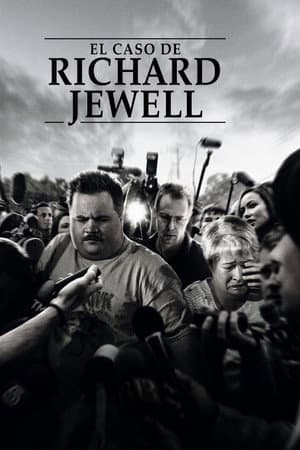
Richard Jewell
Director: Clint Eastwood
Cast: Paul Walter Hauser, Jon Hamm, Kathy Bates, Sam Rockwell, Olivia Wilde
Richard Jewell was a security guard at the 1996 Atlanta Olympics who discovered a backpack containing explosives and prevented a higher number of casualties by helping evacuate the area shortly before the blast occurred. He was initially presented as a hero whose intervention saved lives, but Jewell subsequently became the number one suspect and was investigated as the presumed perpetrator.
⚠ Contains spoilersRichard Jewell's World Before the Bombing
The film opens in the mid-1980s, when Richard Jewell works as a supply clerk at a small law office in Atlanta, Georgia. His character is established from the very first scene: an affable, enthusiastic man with a genuine obsession with law enforcement. In that setting he meets Watson Bryant, a young lawyer with an irreverent and impatient temperament who works in the same building. The relationship between the two is brief but meaningful: Richard gives Watson a bag of gummy bears, an apparently trivial gesture that reflects the protagonist's generous and somewhat naive nature. Watson, though mildly exasperated by Richard's intensity, recognizes in him an honest and well-meaning person. This initial connection will become the central bond of the story years later.
The narrative jumps forward to 1996. Richard, who has never given up his dream of becoming a law enforcement officer, works as a security guard at Piedmont College in Georgia. His excessive zeal in enforcing rules—he goes so far as to detain students for minor infractions and to involve himself in situations that exceed his authority—ultimately costs him the job. Far from being discouraged, Richard finds a new opportunity as a private security guard at Centennial Olympic Park in Atlanta, where that year's Olympic Games are being held. He lives with his mother, Bobi Jewell, a hardworking and devoted woman who shares a deep and affectionate bond with her son. The dynamic between the two portrays Richard as a middle-aged man who, despite his social and professional limitations, retains an unshakeable faith in institutions and in his own role as a protector of the community.
The Bombing and the Turn That Makes Him a Suspect
On the night of July 27, 1996, during a concert at Centennial Olympic Park, Richard spots a suspicious unattended backpack beneath a bench. He acts diligently: he alerts his superiors, notifies law enforcement, and begins evacuating bystanders from the area. Minutes later, the backpack explodes. The device, loaded with nails and other projectiles, kills two people and injures more than a hundred. Richard's intervention had managed to considerably reduce the number of casualties.
In the hours and days that follow, Richard is portrayed by the media as a hero. Cameras seek him out, journalists celebrate his actions, and his story embodies the perfect narrative of the ordinary citizen who saves lives. That recognition, however, is short-lived. Kathy Scruggs, a reporter for the Atlanta Journal-Constitution, ambitious and willing to do whatever it takes to get the scoop, obtains from an FBI source the information that federal investigators have placed Richard in their crosshairs as the prime suspect. Scruggs publishes the story before any formal charges have been filed, unleashing a media storm that destroys Richard's public image overnight.
FBI agent Tom Shaw leads the investigation under the theory that Richard fits the psychological profile of the so-called "frustrated hero": someone who manufactures a crisis in order to resolve it and thereby gain recognition. Shaw and his colleagues see in Richard's employment history—his overreach as a university security guard, his obsessive desire to become a police officer—signs that align with that profile. From that point on, the FBI deploys constant surveillance on him, searches his apartment, confiscates his belongings, and subjects him to an interrogation under false pretenses, leading him to believe he is participating in a training video when he is in fact being formally questioned without a lawyer present.
The Central Conflict: The Presumption of Guilt
The crux of the conflict is thus laid out clearly: Richard Jewell, a man who acted correctly and in all likelihood saved lives, becomes the prime suspect in a bombing he did not commit. The FBI apparatus, with its resources and its determination to close the case, and the press, with its appetite for the scoop and for sensation, effectively join forces to destroy a man who lacks the means to defend himself.
When the situation becomes untenable, Richard turns to Watson Bryant, the lawyer he met years earlier. Watson, who now runs his own small firm alongside his partner Nadya, agrees to represent him. The relationship between the two captures the tension of two opposing personalities: Watson is combative, distrustful of authorities, and acutely aware of the real danger his client faces; Richard, by contrast, continues to believe in the FBI and in the system in a way that is almost incomprehensible, which makes him his own worst enemy during interrogations and interactions with agents. That gap between the protagonist's naivety and the brutality of the legal and media process he faces is the dramatic engine that drives the entire story.