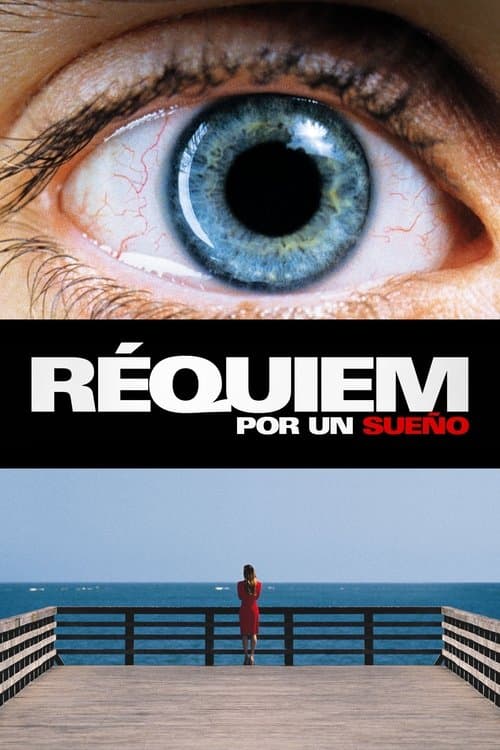
A Summer in Coney Island
The story is set in Coney Island, Brooklyn, in the early 1990s. Harry Goldfarb is a young man in his mid-twenties living on the margins of society, with no steady employment and a heroin addiction that consumes much of his time and energy. His routine consists of repeatedly pawning his mother's television set to obtain money to buy drugs, a practice so systematic that the transaction has become an almost daily ritual. His best friend and fellow user is Tyrone Love, a young African American from the neighborhood with whom he shares both his addiction and their plans for the future, always vague and perpetually deferred.
Harry's girlfriend, Marion Silver, comes from a comfortable middle-class family but has also fallen into heroin use. Marion harbors the dream of one day opening her own fashion design studio, an aspiration she keeps alive in her sketchbooks even as heroin gradually pushes that project into the background. Between Harry and Marion there exists a genuine emotional relationship, marked nonetheless by the codependency and instability imposed by their shared addiction.
The fourth principal character is Sara Goldfarb, Harry's mother, a widowed woman who lives alone in her Coney Island apartment. Sara is a lonely person whose life revolves around the television, particularly a shopping or game show to which she is addicted with the same intensity as her son is to heroin. One day she receives a phone call informing her that she has been pre-selected to appear on that program. The news completely transforms her mood and gives her a renewed sense of purpose.
The Motivations and the Inciting Event
The call Sara receives acts as the true narrative catalyst for her storyline. Obsessed with the idea of appearing on television, Sara decides she wants to wear the red dress she wore to Harry's graduation, a garment that no longer fits her. Driven by that desire, she visits a doctor who prescribes amphetamines as a weight-loss treatment, a common and loosely regulated method at the time. The pills, combined with other substances the doctor progressively adds, trigger a chemical dependency that Sara does not perceive as such, since her pills come from a medical prescription rather than the black market. This distinction is irrelevant to her body: the addiction takes hold with the same brutality.
Meanwhile, Harry and Tyrone devise a plan over the course of the summer to escape their precarious situation. The idea is to buy a sizeable quantity of heroin wholesale, cut it, and resell it in the neighborhood for enough profit to accumulate capital. With that money, Harry intends to fund the design studio Marion wants to open, thereby becoming the financial backbone of the relationship and leaving marginality behind for good. For all three young people, the plan represents the fantasy of a normal, stable life achieved through an illegal shortcut.
The central conflict of the film is established from these opening sequences as a structure of four parallel addictions advancing simultaneously. Each character pursues a particular version of the American Dream—success, recognition, love, financial independence—and each has found a substance or an obsession that promises to ease the pain of the present and shorten the path to that goal. Harry's, Tyrone's, and Marion's heroin, and Sara's amphetamines, appear not merely as self-destructive vices but as responses to concrete emotional and social deficiencies: Sara's loneliness, Tyrone's structural poverty, Marion's lack of self-worth, and Harry's inability to take on adult responsibilities.
From the outset, the film establishes a visual and narrative symmetry among the four characters that underscores the moral and chemical equivalence of their respective dependencies. The editing associates the ritual of injecting heroin with that of taking prescribed pills, equating both acts in their compulsive dimension and in the immediate pleasure they generate. This equivalence constitutes the ideological core of the story: addiction does not discriminate by social class, age, race, or background, and the system surrounding the characters—doctors who prescribe without restraint, dealers who supply the market, a television industry that feeds fantasies of fame—is as responsible for their situation as their own individual choices.
The summer that opens the story is, for all four protagonists, the moment of greatest hope before everything begins to spiral downward.