Nomadland
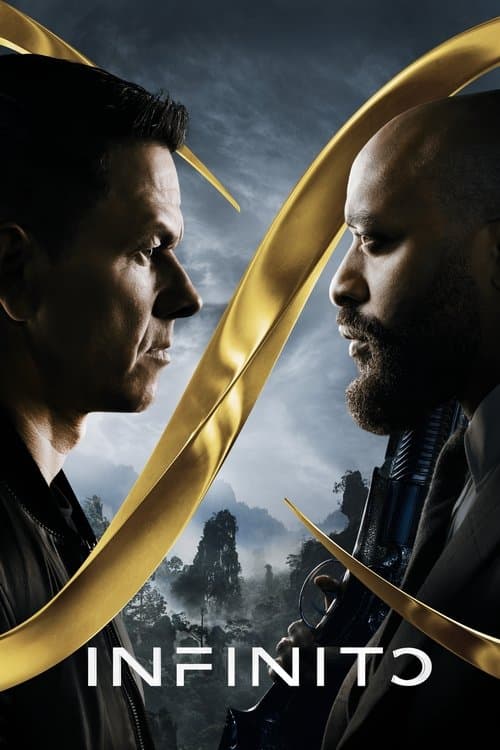
Infinite
Director: Antoine Fuqua
Cast: Mark Wahlberg, Chiwetel Ejiofor, Sophie Cookson, Jason Mantzoukas, Rupert Friend
Evan McCauley has skills he never learned and memories of places he has never visited. Self-medicating and on the verge of a mental breakdown, a secret group calling themselves the "Infinites" comes to his rescue, revealing that his memories are real.
⚠ Contains spoilersThe Collapse of Empire and the Beginning of Nomadic Life
Nomadland is set against the backdrop of the American economic crisis of the late 2000s. The story begins in Empire, Nevada, a small town whose existence depended almost entirely on the US Gypsum company's drywall manufacturing plant. When the plant permanently closes in 2011 due to the collapse of the housing market, the entire town disappears from the map: zip code 89405 is officially eliminated. With it disappears the only world Fern had ever known.
Fern is a woman in her mid-to-late sixties who has spent most of her adult life in Empire alongside her husband, Bo, with whom she shared a modest but stable existence. Bo's death, which occurred shortly before the plant's closure, deprives Fern not only of her life companion but also of the last anchor keeping her tied to a conventional existence. The combination of widowhood and the literal disappearance of her community leaves her without a home, without work, and without a sufficient institutional support network to reintegrate into the ordinary economic system. Fern receives no pension or benefit that would allow her to rent or acquire stable housing, and her age places her in a highly vulnerable position within the labor market.
Faced with this situation, Fern makes a decision that defines the entire film: rather than seeking a way to reintegrate into sedentary life, she outfits a white van—which she affectionately names Vanguard—and begins living in it permanently. This is not a romantic choice or a deliberate spiritual quest, at least not at first, but a pragmatic response to economic circumstances that leave her no other viable way out. Fern finds seasonal work at an Amazon warehouse in Fernley, Nevada, during the peak holiday season, which allows her to generate enough income to keep moving.
The Characters of the Road and the Conflict Between Freedom and Belonging
During her stay in the Amazon seasonal workers' parking lot, Fern comes into contact with a community of people who, like her, live in vans, RVs, and vehicles of all kinds. This subculture of modern nomads is composed mainly of older people expelled from the formal economy, who have found in itinerancy a means of survival and, in many cases, of identity.
Through these first interactions, Fern meets Linda May, an affable and optimistic woman who introduces her to the world of organized nomad gatherings and who represents a model of positive adaptation to that life. Linda May tells her about Bob Wells, a real and charismatic figure who organizes annual gatherings in the Arizona desert called RTR (Rubber Tramp Rendezvous), conceived as a meeting point, a knowledge-sharing forum, and a mutual support network for people living in their vehicles. Bob Wells functions in the film as a kind of philosophical and ideological guide for this community—someone who has theorized and championed nomadism as a legitimate and even liberating response to an economic system that has failed entire generations.
At the RTR, Fern meets Dave, a quiet and cordial man with whom she establishes a genuine connection. Dave is also a nomad, though his personal history and motivations differ from Fern's: he seems to have arrived at that life from a place of greater choice and less immediate trauma. The relationship between the two develops with understated warmth and establishes one of the film's most important emotional axes.
The central conflict of Nomadland is not external in nature, nor dramatic in the conventional sense. There is no defined antagonist or explicit threat. The real tension resides in an unspoken question that runs through the entire story: can Fern—or does Fern want to—reintegrate into a sedentary and conventional life? From its opening sequences, the film stages a collision between two ways of understanding existence: one that demands roots, stability, and permanent bonds, and the one Fern has built upon perpetual movement, self-sufficiency, and voluntary solitude.
Fern's sister, Dolly, appears briefly and offers her the possibility of moving in with her, an offer Fern declines. This scene distills the central dilemma: Fern has options, she has people who love her, but something in her—tied to the memory of Bo, to the loss of Empire, or to a deeper need for autonomy—prevents her from accepting a return to an indoor life. Vanguard is not merely a vehicle: it is the only space where Fern can continue to be who she is, or who she has become.