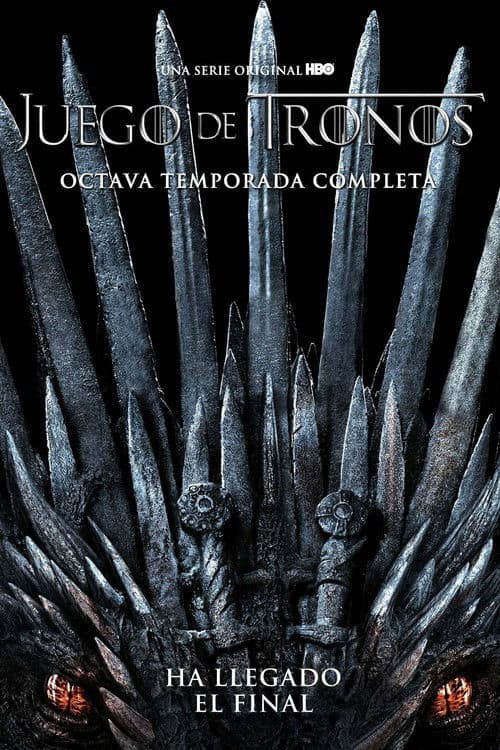
A World in Fragile Balance
Game of Thrones takes place in the Seven Kingdoms of Westeros, a continent ruled from the Iron Throne by King Robert Baratheon, who seventeen years earlier led a rebellion that overthrew the Targaryen dynasty. Ruling alongside him are his wife Cersei Lannister and her powerful family, the Lannisters of Casterly Rock, known for their wealth and political maneuvering. To the north of the kingdom stretches a hostile territory beyond the Wall, a colossal structure of ice guarded by the Night's Watch, whose members have spent centuries keeping vigil against threats that the rest of Westeros dismisses as legend.
The story begins with Eddard "Ned" Stark, Lord of Winterfell and Warden of the North, a man of unbreakable honor who lives far from the capital, King's Landing, alongside his wife Catelyn Tully and their children: Robb, Sansa, Arya, Bran, and young Rickon. Also residing at Winterfell are Jon Snow, Ned's bastard son, and Ned's younger brother Benjen Stark, who serves as First Ranger of the Night's Watch. From the very first episode, a supernatural threat is introduced north of the Wall: the White Walkers, beings of unknown nature who massacre a group of rangers, signaling that the world's equilibrium is more fragile than it appears.
The Inciting Event: the Death of Jon Arryn and the Call South
The incident that shatters the established order is the death of Jon Arryn, the King's Hand and a mentor to Ned Stark since his childhood. Robert Baratheon travels personally to Winterfell to ask Ned to fill the vacant position of Hand of the King, the second most powerful office in the Seven Kingdoms. Ned accepts reluctantly, driven in part by a secret letter from Lysa Arryn, Jon's widow, accusing the Lannisters of having murdered her husband. This revelation turns the move to King's Landing into a covert investigation.
In parallel, across the Narrow Sea, another equally central storyline is introduced. Viserys Targaryen, a claimant to the throne he considers his by birthright, negotiates with Dothraki warlord Khal Drogo to give him his sister Daenerys Targaryen in exchange for an army with which to reconquer Westeros. Daenerys, subjected since childhood to her brother's will, begins her journey from total submission toward becoming a figure of autonomous power. As a wedding gift, she receives three petrified dragon eggs—objects that appear to be mere relics but foreshadow the return of the extinct creatures.
The Characters and Their Motivations
The cast of characters introduced in these opening moments is vast, defined by competing motivations. Tyrion Lannister, the younger brother of Cersei and Jaime, is a dwarf of exceptional intelligence who travels north with Ned and uses his visit to the Wall to observe the dynamics of power from a peripheral vantage point. Jaime Lannister, known as the Kingslayer for having murdered the king he swore to protect, carries on an incestuous relationship with his sister Cersei—a relationship that is brutally exposed when Bran Stark discovers them at Winterfell. To protect that secret, Jaime throws the boy from a window, leaving him in a coma and setting off a chain of irreversible consequences.
Petyr Baelish, nicknamed Littlefinger, the master of coin and former admirer of Catelyn, operates as a manipulator in the shadows of the court. Varys, the eunuch master of spies, accumulates information from every sphere of power. Both embody the politics of King's Landing: a board where loyalty does not exist and alliances are bought or manufactured.
The Central Conflict
The core of the conflict is established along several simultaneous axes. At the immediate level, Ned investigates the death of Jon Arryn and gradually discovers that Cersei and Robert's children are not in fact the king's descendants, but the product of her incest with Jaime. This revelation places him in a position of extreme danger in a court where truth is a political tool, not a moral value.
At a structural level, Robert's throne is contested on multiple fronts: the Targaryens wait across the sea, the great houses of Westeros maintain volatile loyalties, and the threat from the north—the White Walkers and the armies of the dead beginning to muster—poses a conflict of an entirely different, existential scale, one that the inhabitants of the Seven Kingdoms are not yet able to recognize as their most pressing concern.
The series establishes from the outset that the world of Westeros does not distinguish between heroes and villains in any conventional sense: honorable characters are not protected by their virtue, and the true enemy may be different from all those fighting for the Iron Throne.