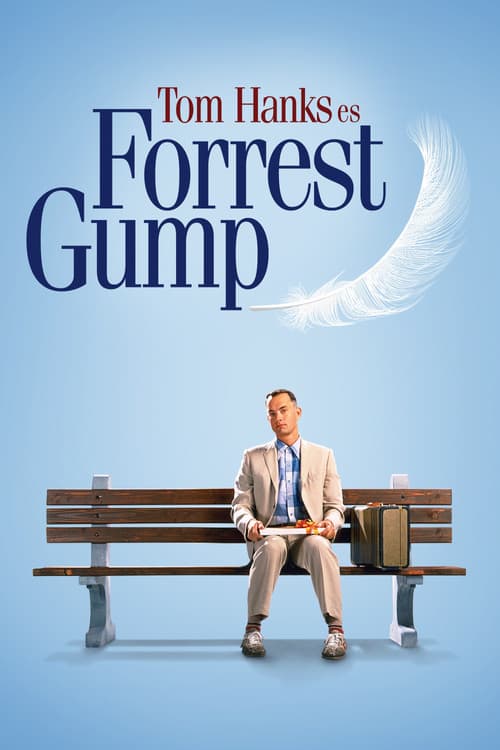
A man on a bench, a life to tell
The story begins with a seemingly ordinary image: a white feather floating through the air and slowly drifting down to rest near the feet of a man sitting on a park bench in Savannah, Georgia, in 1981. That man is Forrest Gump, an adult of about thirty-five with below-average intelligence — his IQ is 75 — carrying a box of chocolates and waiting for the bus. As he waits, he begins to narrate his life to a series of strangers who sit beside him, moving between his story and the immediate present with a disarming naturalness. The phrase that opens his narration, quoting his mother, immediately establishes his worldview: life is like a box of chocolates, you never know what you're gonna get.
Through this narrative device — Forrest as an unreliable narrator by virtue of his naivety, though honest to a fault — the film unfolds a biography spanning decades of American history. Forrest does not fully grasp the weight of the events he has lived through, which makes his testimony a singular blend of innocence and historical significance.
A different child in the American South
The narration goes back to Forrest's childhood in Greenbow, Alabama, during the 1950s. Forrest grows up with his mother, Mrs. Gump, a woman of unbreakable will who refuses to accept that her son has limitations. It is she who instills many of the values that will guide Forrest throughout his life: unconditional kindness, perseverance, and the conviction that Forrest deserves the same opportunities as anyone else. To pay the mortgage on her house, Mrs. Gump rents out rooms to visitors, among them a young Elvis Presley, whom Forrest unknowingly inspires with some of his hip-swiveling dance moves.
Forrest is born with crooked legs and must wear leg braces to walk, making him a regular target for other children's ridicule. It is against this backdrop of exclusion and loneliness that Jenny Curran appears — a girl his own age who is the first, and for a long time the only, person to invite him to sit beside her on the school bus. A deep friendship grows between them, one Forrest describes with his characteristic literalness as the best friend anyone could have. Jenny, however, carries her own wound from the very beginning: she comes from a broken home and suffers abuse at the hands of her father, a situation that will decisively shape her character and her future choices. While Forrest sees the world with an almost absolute trust, Jenny develops an urgent need to escape — to flee from everything that makes her feel trapped.
The physical catalyst that immediately changes Forrest's trajectory occurs during his childhood: chased by a group of bullies who hound him on bicycles, Forrest starts running to get away. In that moment, his leg braces snap and fall off, and Forrest discovers he can run with extraordinary speed. This purely physical ability, stripped of any conscious strategy, will be the key that opens doors which would otherwise have remained shut.
The central conflict: two intertwined destinies
From its very first minutes, the film establishes the structural conflict that underpins the entire story: the relationship between Forrest and Jenny, two people bound by genuine affection but destined to walk radically opposite paths. Forrest moves through life in a linear, almost accidental way — without defined ambitions but with an unshakeable loyalty toward the few people he loves. Jenny, by contrast, is constantly running: from her past, from her fears, from any form of stability that reminds her of the vulnerability she experienced as a child.
The question the film poses from the outset is not whether Forrest will achieve success — which arrives, involuntarily and repeatedly — but whether he will ever manage to be with Jenny in the way he desires. Forrest does not express this with emotional sophistication, but his narration from the bench makes clear that everything he has lived through — all the wars, races, ping-pong matches, and business ventures — orbits around the woman he has never stopped loving since he was six years old.
The bench, the bus he is waiting for, the box of chocolates: everything suggests that Forrest is heading somewhere specific, to reunite with someone. The audience does not yet know with whom or under what circumstances, but the film has already built the emotional framework within which every historical episode to come will find its true meaning.