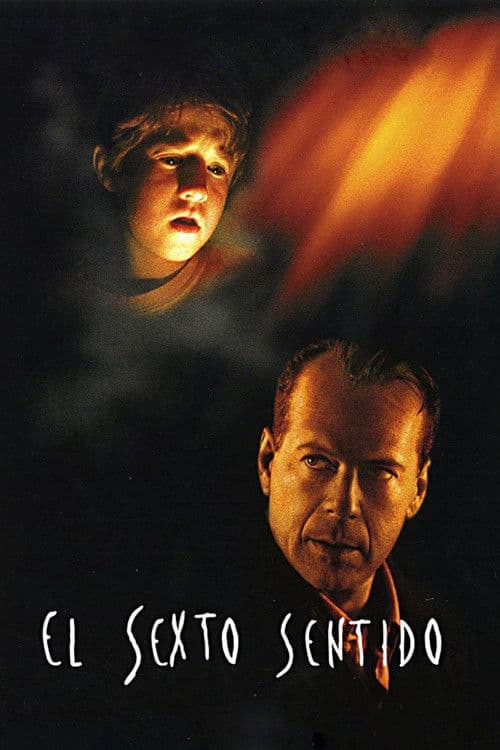
A renowned psychologist at the peak of his career
The story begins in Philadelphia, on a night of celebration at the home of Dr. Malcolm Crowe, a highly regarded child psychologist who has just received a commendation from the city for his outstanding work with at-risk children. Malcolm shares this moment of pride with his wife, Anna Crowe, and the evening projects an image of domestic stability and professional achievement. That same night, however, Vincent Grey, a former young patient Malcolm treated years earlier whose life had since spiraled into marginalization and mental instability, breaks into their home. Vincent accuses Malcolm of having failed him, of being unable to help him when he needed it most, and before taking his own life he shoots Malcolm, wounding him severely.
The film then jumps forward several months. Malcolm appears to have physically recovered, but his life has changed in a quiet and profound way. His relationship with Anna has grown distant and cold: she seems to ignore him, they barely exchange words, and he senses that something fundamental has broken between them without being able to fully explain it. Overwhelmed by the guilt stemming from his failure with Vincent, Malcolm decides to dedicate himself to a new patient whose profile closely resembles that of the young man who shot him, as though redeeming that past failure were the only way to recover the balance he has lost.
Cole Sear and the weight of an unbearable secret
The new patient is Cole Sear, an eight-year-old boy who lives with his mother, Lynn Sear, in a modest Philadelphia apartment. Lynn is a hardworking, loving, and devoted mother, but one who is unable to understand what is truly happening to her son. Cole is an intelligent, sensitive, and introverted child who suffers from severe isolation: his classmates avoid or bully him, and at school he is the target of mockery and aggression. The adults around him, including his teachers, sense a strangeness in him that they cannot define.
What no one knows, except Cole himself, is that the boy can see and hear the dead. The ghosts manifest before him with full physical presence, most of them unaware of their own condition. They appear exactly as they died: with visible wounds, marks of violence, or signs of illness. Cole lives with these apparitions in a terrifying and solitary way, unable to share his experience with anyone for fear of not being believed or of being considered mentally ill. The tension he accumulates manifests in behaviors that the adults around him interpret as classic psychological symptoms: anxiety, withdrawal, and episodes of panic.
Malcolm approaches Cole cautiously, applying active listening techniques and attempting to build a bond of trust. At first, Cole is guarded and suspicious, but he gradually begins to open up in response to the psychologist's patience and empathy. Malcolm sees in this case the opportunity to repair the harm he failed to prevent with Vincent Grey, and that personal motivation colors his entire relationship with the boy with an emotional urgency that goes beyond professional obligation.
The central conflict: helping someone who sees what no one else can
The core of the narrative is built around a twofold question: will Malcolm be able to help Cole manage his ability and reintegrate into the world of the living? And can he do so before isolation and fear destroy the boy? The setup establishes two parallel wounds: Cole's, as he carries an ability that no one understands or accepts, and Malcolm's, as he grapples with guilt over a past failure and the deterioration of his personal life.
From its opening minutes, the film establishes an oppressive and restrained atmosphere built on silences, glances, and cold spaces. Philadelphia appears as a city with a visible history, where the past coexists with the present in an almost literal way. This setting reinforces the sense that the boundaries between what exists and what should no longer exist are more permeable than reason allows.
At this point, the viewer is unaware of the detail that redefines the entire narrative: Malcolm Crowe died from the gunshot wound inflicted by Vincent Grey on that night of celebration. What the story presents as the tale of a living psychologist treating a disturbed child is, in reality, the story of a ghost who does not know he is dead, attempting to fulfill one last mission before he can move on. Cole is not merely his patient: he is the only human being capable of seeing him.