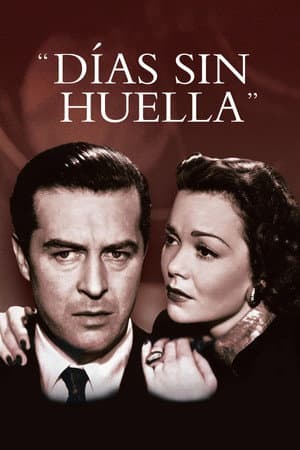
The Lost Weekend
Director: Billy Wilder
Cast: Ray Milland, Jane Wyman, Phillip Terry, Howard Da Silva, Doris Dowling
Don Birnam is a failed writer whose addiction to alcohol has destroyed him physically and morally, reducing him to a man devoid of willpower. He is capable of anything to keep drinking, even stealing. Both his girlfriend and his brother try by every means to reform him, but their efforts seem futile.
⚠ Contains spoilersA Writer in Free Fall
The Lost Weekend (original Spanish title: Días sin huella) is a 1945 American film directed by Billy Wilder, based on the 1944 novel of the same name by Charles R. Jackson. The story centers on Don Birnam, a New York writer who has spent years struggling with severe alcoholism that has brought his literary career to a complete standstill and deeply damaged his personal relationships.
At the film's opening, Don and his brother Wick Birnam are preparing to leave together for a weekend in the country — a trip Wick has deliberately arranged in the hope of keeping his brother away from alcohol for a few days and helping him regain some stability. Don has already gone ten days without drinking, a period of sobriety that both Wick and his girlfriend Helen St. James regard as promising. However, Don has secretly hidden a bottle of whiskey tied to a rope outside the apartment window, which reveals from the very first moment that his apparent recovery is no such thing: his mind is completely dominated by the desire to drink, and any plan for improvement is merely a façade he maintains to satisfy the expectations of those around him.
The Inciting Incident: The Lost Weekend
The incident that sets the main plot in motion occurs when Wick goes downstairs to hail a taxi to the station and Don seizes that brief moment of solitude to retrieve the hidden bottle. Caught in the attempt by Helen, who has come to say goodbye, Don persuades Wick to go to the cinema with Helen while he finishes packing. Once alone in the apartment, Don does not board the train with his brother. Instead, he decides to stay in New York with the money Wick left for the cleaning woman, and so begins a spiral of drunkenness that will stretch across the entire weekend.
This abandonment of the original plan is not merely an impulsive relapse: it reveals the central structure of the film's conflict. Don is perfectly aware of his problem and capable of analyzing and reflecting on himself — indeed, he fantasizes about writing a great novel on the very subject of alcoholism — yet that intellectual clarity provides him with no real tools to combat his addiction. Intelligence and self-awareness coexist in him with a total inability to act any differently.
The Characters and Their Motivations
Helen St. James is Don's girlfriend and represents the figure of unconditional love and external hope. She knows the severity of Don's alcoholism and has witnessed multiple prior relapses, yet she refuses to leave him. Her motivation is not naivety but a genuine faith — albeit one under increasing strain — that Don can recover if he finds the necessary willpower. Helen serves as the protagonist's emotional anchor, though her presence also demonstrates the extent to which Don is capable of lying and manipulating those who love him in order to protect his addiction.
Wick Birnam is Don's brother and fulfills the role of the exhausted caretaker. He manages the practical aspects of Don's life, organizes recovery plans, and implicitly bankrolls the protagonist's existence. Wick feels a mixture of brotherly love, guilt, and frustration: he cannot abandon his brother, but he does not know how to save him either. His absence over the weekend is precisely the condition that allows Don to self-destruct with total freedom.
Two secondary but essential characters complete the map of Don's relationships. Nat, the bartender at the Gloria bar, is Don's unwitting confidant — the regular witness to his binges and the only one who serves him without judging him, though equally without truly helping him. Bim, the nurse on the alcoholics' ward at Bellevue Hospital, represents the fate toward which Don is heading and functions as a ruthless antagonistic figure: he knows drunks well, harbors no illusions about them, and treats Don with a clinical harshness that stands in stark contrast to Helen's compassion.
The central conflict is thus established clearly within the film's opening minutes: Don Birnam does not struggle against alcohol from the outside, as someone seeking a remedy for an external ailment, but from within a trap in which he himself is an active participant. His greatest enemy is his own desire, and the weekend that begins when the train departs without him represents the battlefield on which that conflict will be resolved, one way or another.