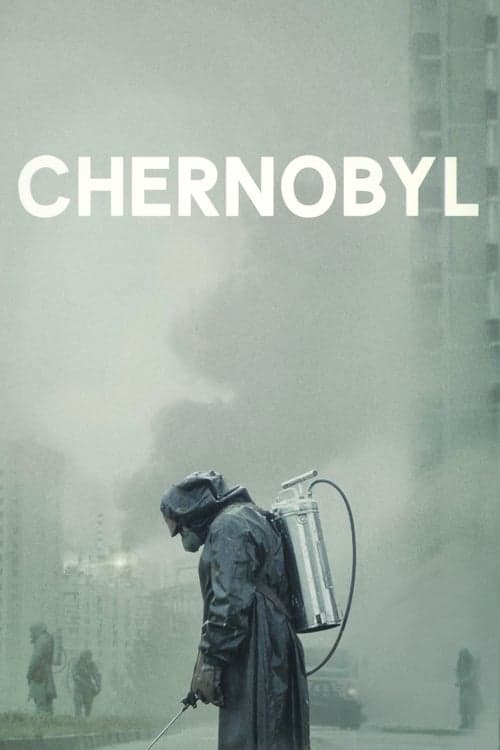
The most serious nuclear disaster in history
In the early hours of April 26, 1986, reactor number 4 of the V.I. Lenin Nuclear Power Plant, located in Pripyat (Soviet Ukraine), suffers a catastrophic explosion during a routine safety test. The explosion destroys the reactor core and releases a massive quantity of radioactive material into the atmosphere, triggering what will become the most devastating nuclear accident in human history. The series begins precisely at this moment of absolute rupture of the established order, showing how the Soviet political and bureaucratic system responds to a reality that does not fit its official narrative of technological invulnerability.
The first episode immediately establishes the central duality of the story: the physical catastrophe of the reactor and the institutional catastrophe of a State incapable of acknowledging the truth. The plant's operators, the firefighters dispatched to the scene, and the first officials who arrive to assess the damage all confront a reality none of them fully understands, while the Soviet apparatus begins to minimise and distort information from the very first moment.
The protagonists and their initial motivations
Valery Legasov is a nuclear chemist and senior member of Moscow's Kurchatov Institute of Atomic Energy. The series introduces him in 1988, two years after the disaster, secretly recording a series of audio tapes in which he recounts the truth about what happened at Chernobyl before taking his own life. This narrative device functions as the frame for the entire story: the viewer knows from the outset that Legasov will pay a very high price for knowing too much and refusing to stay silent. In 1986, however, Legasov is urgently summoned to the Kremlin as a scientific adviser. His initial motivation is that of the loyal official who genuinely believes in science and in the possibility of managing the crisis with technical rigour, not yet anticipating the scale of the lies surrounding him.
Boris Shcherbina is the Deputy Chairman of the USSR Council of Ministers, a high-ranking Soviet bureaucrat accustomed to wielding power with a firm hand. He is sent to Chernobyl as head of the governmental commission responding to the accident. In his first interaction with Legasov, Shcherbina perfectly embodies the mindset of the system: the accident cannot be as serious as it appears, information must be controlled, and those in charge must reassure the population. His arc begins from a position of scepticism and blind authority, but his direct exposure to the reality of the disaster will gradually transform him into one of Legasov's most decisive allies.
Anatoly Dyatlov is the deputy chief engineer of the plant and the direct supervisor of the test that triggers the explosion. From the opening minutes, Dyatlov represents the arrogance and institutional pressure that make the disaster possible. When operators Leonid Toptunov and Alexander Akimov report readings pointing to a critical situation, Dyatlov dismisses them as impossible and forces them to continue. His refusal to accept reality—the reactor has exploded, the core is destroyed—is not merely ignorance: it is the embodiment of a system that punishes dissent and rewards conformity. Dyatlov insists the reactor is intact and orders water to be pumped into the core, worsening the situation and exposing his subordinates to lethal levels of radiation.
Lyudmila Ignatenko represents the civilian and human perspective of the disaster. The wife of Vasily Ignatenko, a firefighter stationed in Pripyat, Lyudmila watches from her window as light glows above the plant and sees her husband and his colleagues sent to the reactor without adequate information or protection. Her story introduces the viewer to the most intimate and devastating consequences of radiation exposure, and foreshadows the sacrifice of those who acted on the front lines without understanding what they were facing.
The central conflict: truth versus the system
The structural conflict of the series is not solely the nuclear accident itself, but the silent war between scientific truth and the Soviet State's machinery of concealment. From the first hours after the explosion, Communist Party officials in the region—led by Viktor Bryukhanov, the plant's director, and Mikhail Fomin, its chief engineer—report manifestly false radiation levels and request resources wholly insufficient for the true scale of the disaster. Their reports contradict everything the technicians themselves are observing on the ground.
Legasov quickly grasps that the RBMK-design reactor has suffered total core destruction and that the exposed radioactive material poses a threat to millions of people. Yet communicating that truth within the Soviet system means confronting a chain of power more interested in preserving its image than in protecting its population. The evacuation of Pripyat takes more than 36 hours to be ordered, during which its 49,000 inhabitants continue their daily lives with no information about the danger to which they are exposed.
The series thus poses its fundamental question from the outset: in a system built on institutionalised deceit, what is the price of telling the truth—and who is willing to pay it?